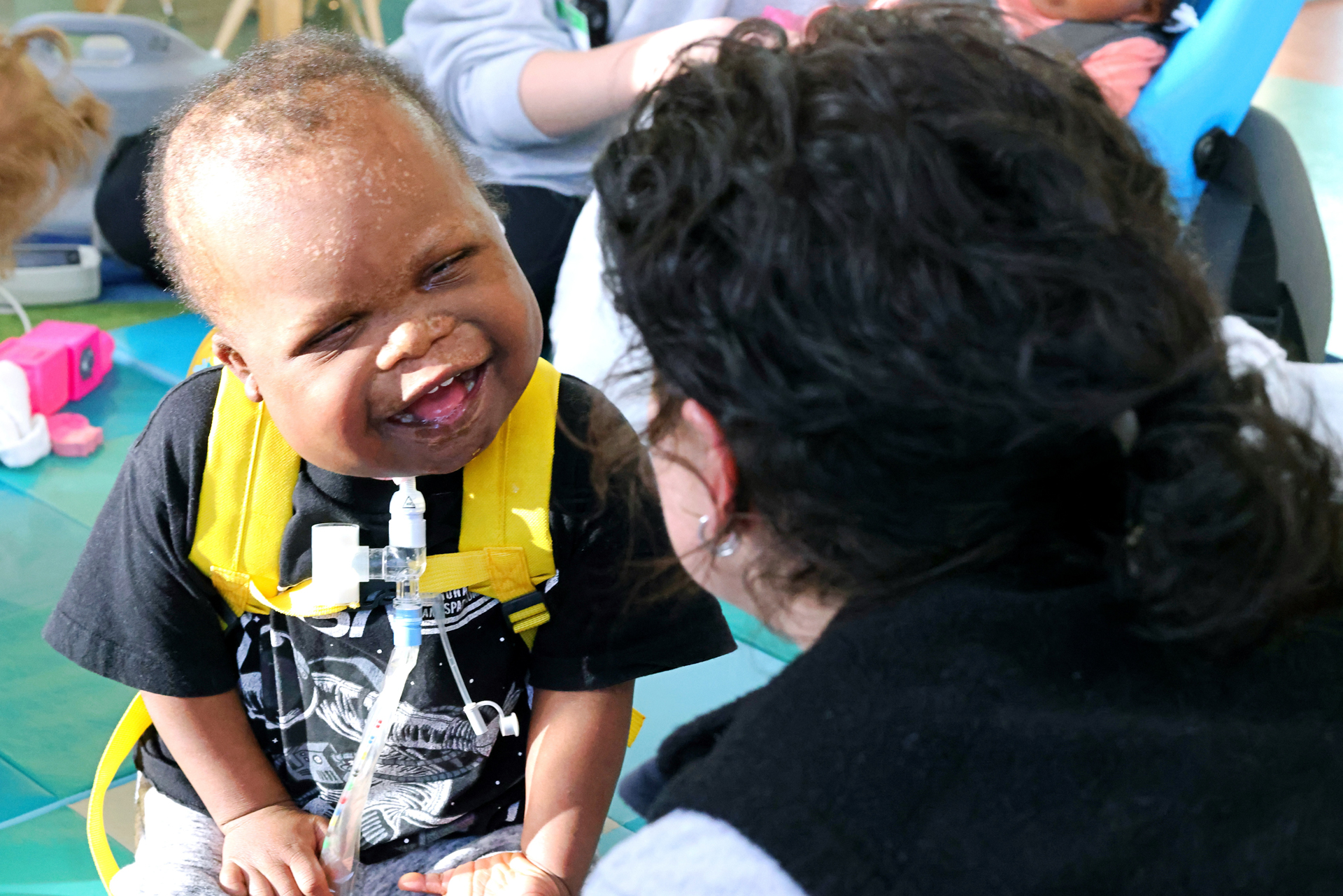
Because Ranken Jordan patients are medically complex, we have a much higher proportion of tracheostomized patients than most hospitals, as well as children with feeding tubes such as gastrostomy tubes (g-tube) or jejunostomy tubes (j-tube).
Those who work with hospitalized children know that tubes often come out, either accidentally or sometimes on purpose by bored little kids looking for attention.
Because tube dislodgement is a fairly common occurrence and can have undesirable and sometimes serious consequences, our team launched a working group in 2022 to look at solutions to reduce its frequency.
We are happy to report that the interventions we have since put in place have reduced the number of tube dislodgements by nearly 50 percent, a tangible example of the benefits of Care Beyond the Bedside® and the power of play.
The tube dislodgement issue
When a trach tube becomes dislodged, it is a medical emergency. A child can become blue and lifeless within moments if their trach comes out. That’s why every child with a trach needs a trained caregiver within arm’s reach 24 hours a day so the tube can be replaced immediately.
Some tube dislodgements happen by accident, such as a patient rolls over or it becomes removed during a change of equipment. Or young kids will pull them out on impulse, not understanding how important the tube is.
Young kids also pull out their tubes for attention. For a kid with a trach or a g- or j-tube, they know that when they pull out their tube, someone will come running.
Developing a solution
In 2022, we assembled the Tube Dislodgement Working Group to look at ways to reduce tubes falling out and keep kids from pulling on them.
The working group, led by Patient Safety Specialist Kim Ueltschy, tracked the results to show the effects of the interventions, all of which were based on our Care Beyond the Bedside model and using play for healing.
Members of the working group developed multiple interventions to decrease the number of tube dislodgments, including trachs, g-tubes, and j-tubes:
- Bedside debriefs – We started “bedside debriefs” every time a trach came out. Anyone who was involved in the incident took a few moments to talk about what happened and how it could be prevented in the future.
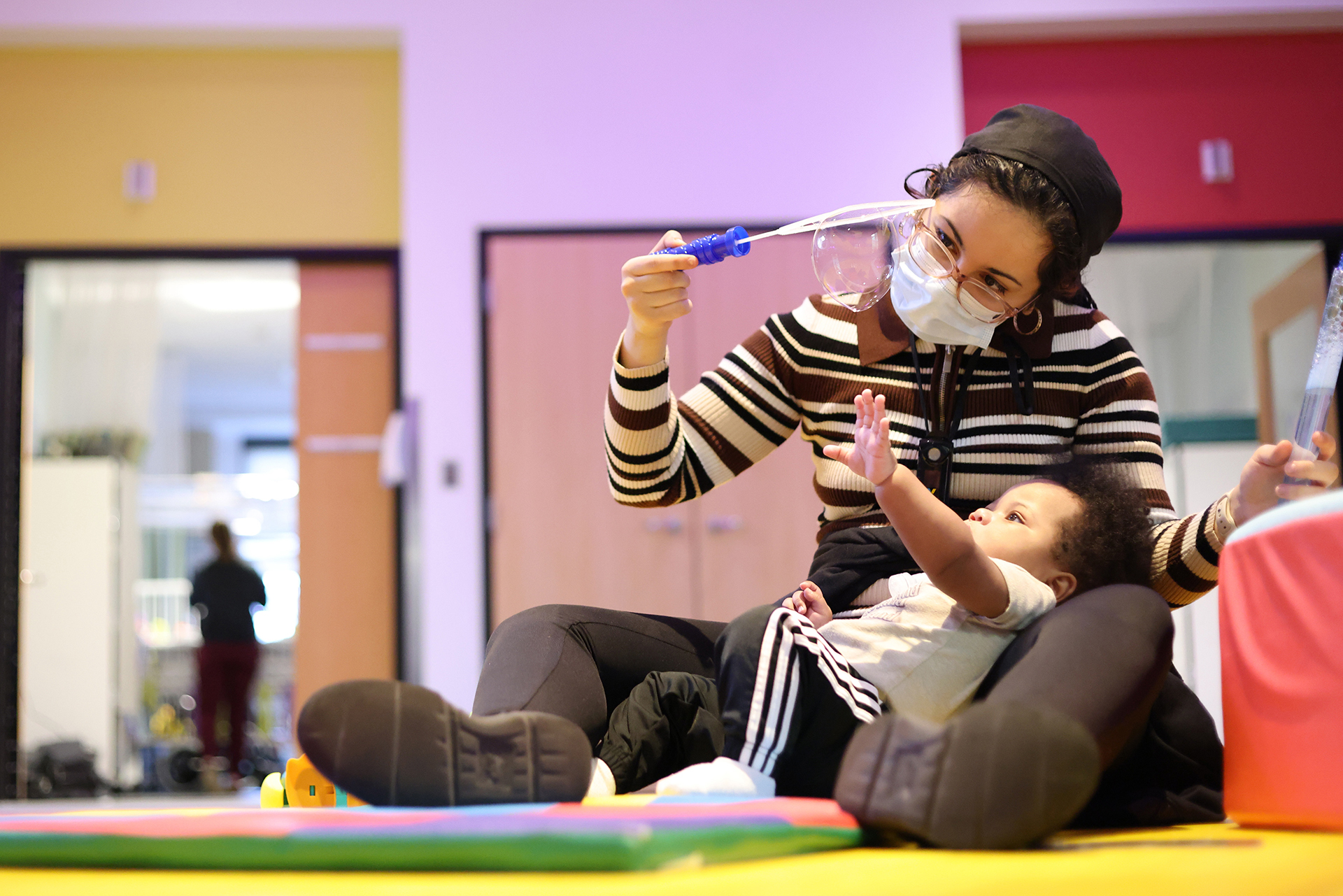
- Addition of PPA role – In 2023, we introduced the Patient Play Associate (PPA) role, a paid position dedicated to engaging Ranken Jordan kids in playful activities. Our PPAs have been beneficial in so many ways and integral in reducing tube dislodgements. PPAs give children appropriate stimulation and offer closer supervision, two things to keep kids from pulling out their tubes.
- Feeding backpack revisions – One small but impactful intervention was the enhanced use of feeding backpacks to hold tubes, pumps, and formula for g-tubes and j-tubes. Slack created more chances to snag, step or trip on the tubing. When we reliably reduced the slack, tubes were accidentally pulled out less often. We retrained our staff on how to set up the feeding backpacks and this made a big difference.
- Introduction of a tier system – We put together a tiered protocol for the kids who frequently pulled at their tubes. The biggest challenge was to avoid encouraging this attention-seeking behavior among our active patients. The tier system provided guidance for how to handle patients who pulled out their tubes only occasionally vs patients who did so repeatedly, often on purpose.
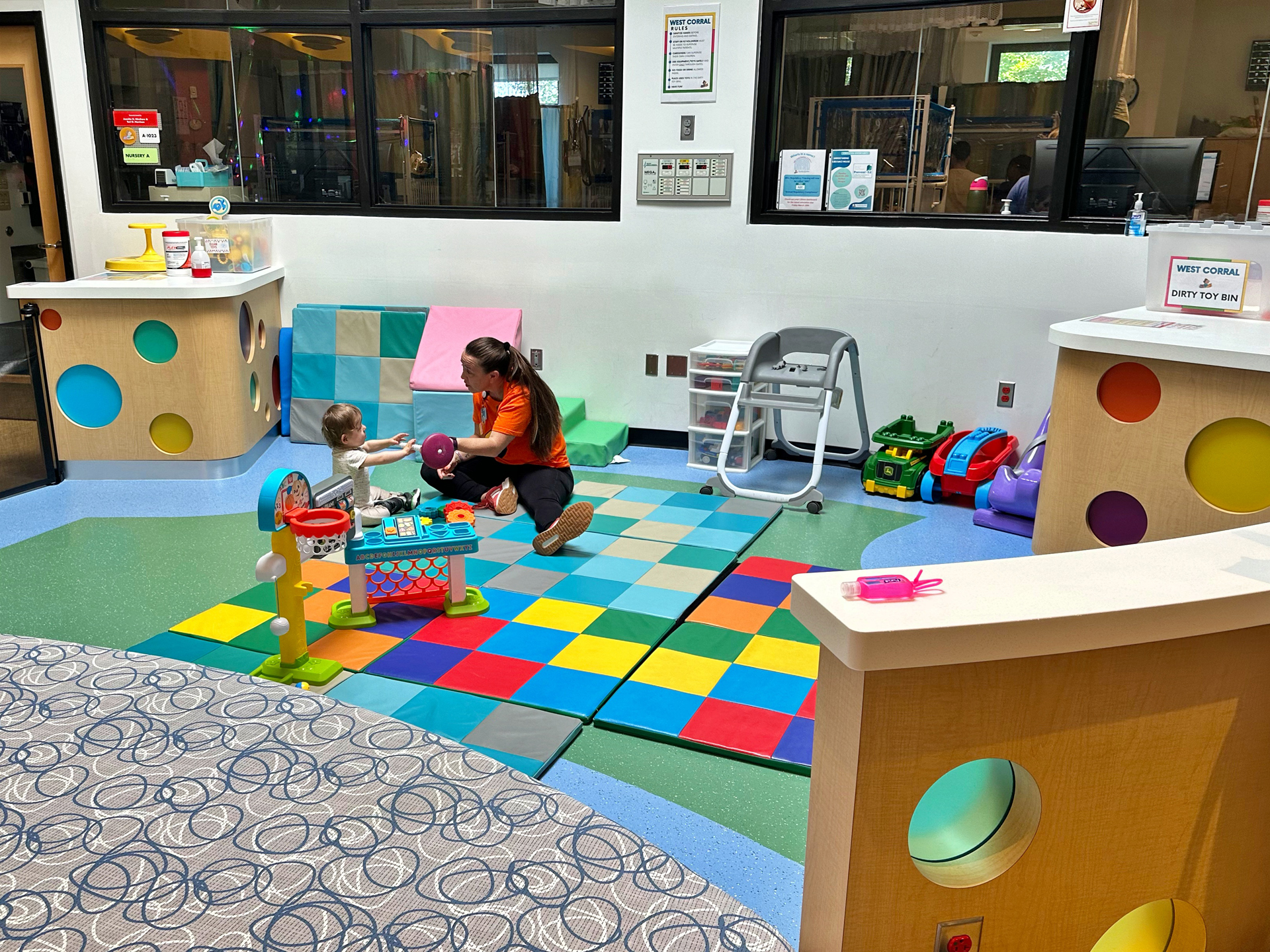
- Play corrals – One of the activities we recommend for children who frequently pull out their tubes is more play time to keep them busy. In 2024, we turned nursing stations into play corrals–similar to a play pen–to ensure there’s plenty of space for the youngest patients to stay busy outside of the hospital rooms.

The Power of Play at work
One of our core values at Ranken Jordan is play. While children who rely on medical devices are often restricted to their rooms in the acute care setting, we believe that all children deserve the opportunity to play, regardless of their reliance on medical devices. These interventions are designed to support Care Beyond the Bedside and our value of play.
We at Ranken Jordan are extremely proud of the team’s work looking at the tube dislodgment issue because it’s a tangible example of how Care Beyond the Bedside improves patient health outcomes. Ranken Jordan continues to be 100 percent committed to the model, and we always look for solutions that keep play at the core.
Ranken Jordan’s lead pediatric psychologist, Claire Wallace, PhD, and Research Director Patrick Hogan, MPH, presented the results from this project at the American Academy for Cerebral Palsy and Developmental Medicine 79th Annual Meeting in 2025. Kim Ueltschy and Margaret Chastain (Director of Patient Experience) presented at the 2025 Pediatric Complex Care Association Annual Meeting. All were met with interest and enthusiasm from folks charged with taking care of patients like ours, seeking solutions to similar problems in their settings.
One of the pillars of our strategic plan is to share the benefits of Care Beyond the Bedside. We are anxious to share learnings that support what we so strongly believe: the power of play leads to better health outcomes.
How you can help
Research around Care Beyond the Bedside is made possible by donations. If you’d like to support Ranken Jordan’s efforts to help ALL kids with medical complexity live their best lives, please visit RankenJordanFoundation.org.