At A Glance
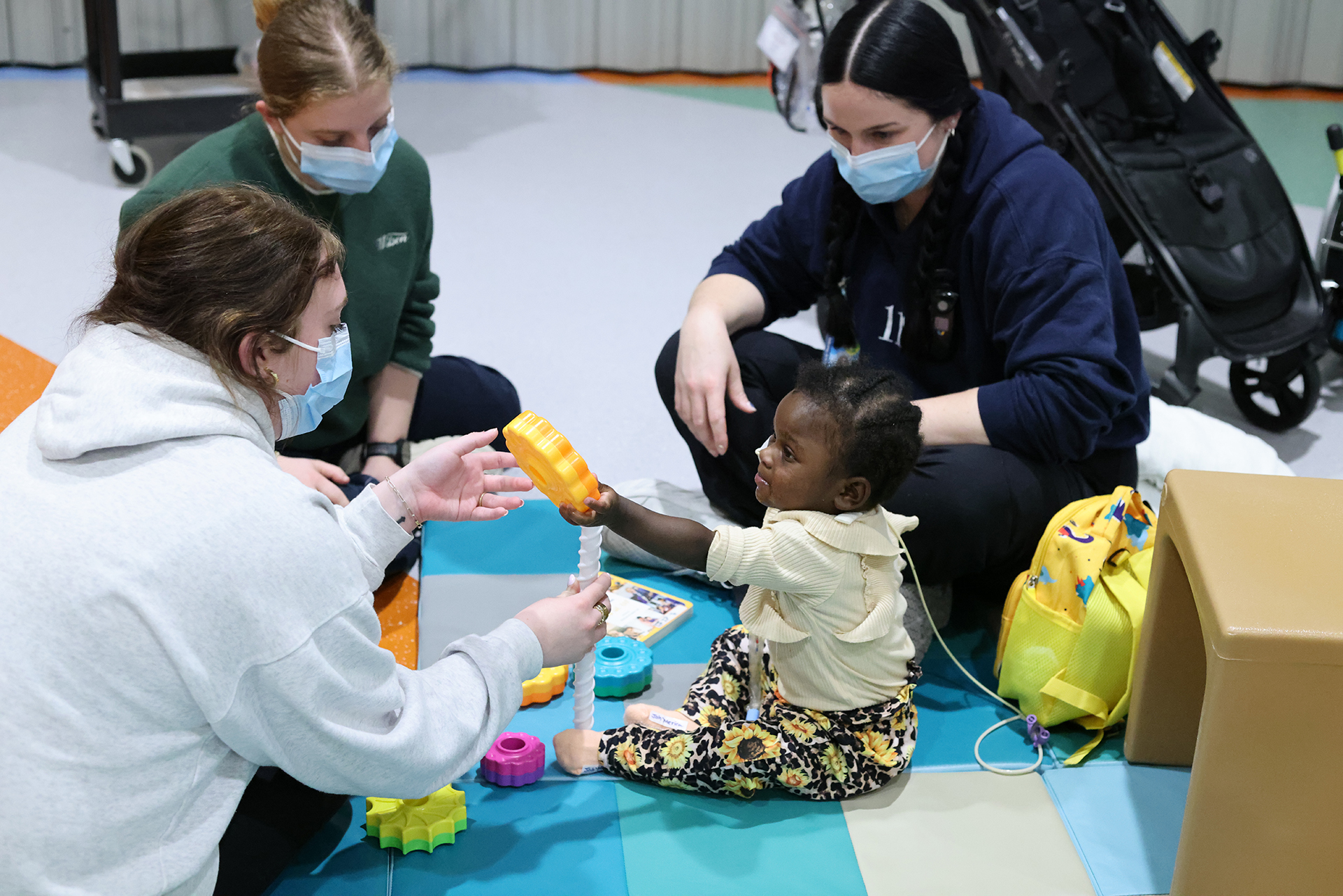
- Ranken Jordan now offers “Let’s Play,” a program to educate caregivers, volunteers, and staff on how to effectively play with medically complex children ages 0-5.
- The initiative is an example of the hospital’s Care Beyond the Bedside® care model, which focuses on getting kids out of their hospital rooms and using play for healing.
- Nearly two years since the first session, the hospital team is seeing positive results, including more engaged patients and more confident caregivers.
Play is at the core of everything we do, and we even offer a paid position dedicated to playing with kids. It’s all driven by our unique care model, Care Beyond the Bedside. We believe kids heal best when they have time to get out of their rooms to play and just be kids.
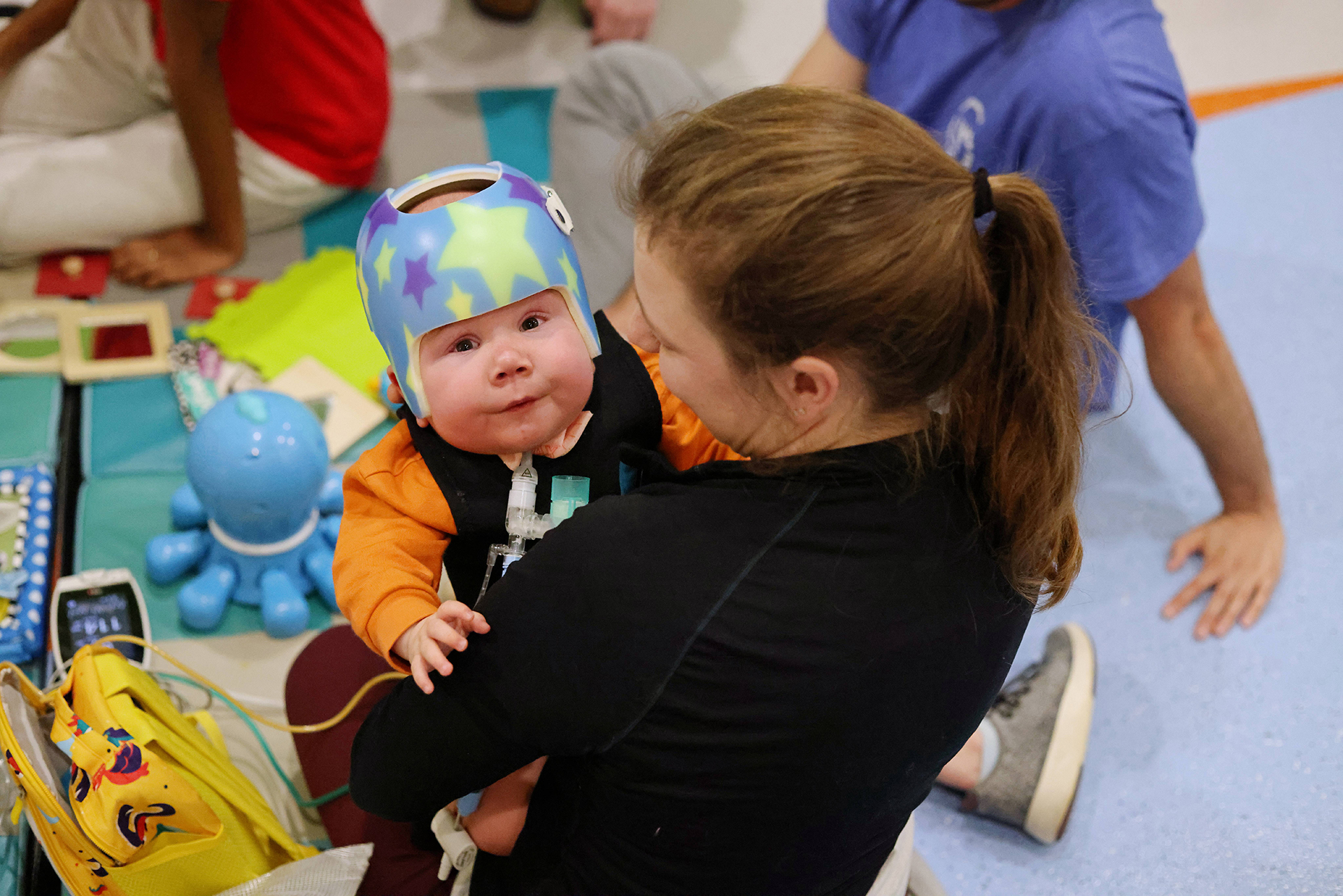
But we understand playing with medically complex children can be intimidating. Our patients often have equipment and they are often not as communicative or mobile as other children their age. But they still love to play!
That’s why we launched Let’s Play, a program to educate our staff, volunteers, and caregivers on how to have safe, quality play time with our patients.
Learning to Play With Purpose
In 2024, we built new play corrals in our West Unit, the part of our hospital for patients 5 and under.
Around the same time, we launched our Patient Play Associate (PPA) role, the paid position focused on playing with patients.
The two initiatives meant we had even more time and space for our kids to focus on play, so we wanted to give our PPAs, volunteers, and caregivers more guidance on how to effectively engage in therapeutic play with patients.
“We had so many volunteers and parents ready to play with kids, but because of our patients’ complexities, the caregivers would sit on the floor with a child and not know what to do next,” said Danielle McKay, Director of Therapy Services at Ranken Jordan.
To help the caregivers, our occupational, physical, speech, and recreational therapists hosted our first Let’s Play event on Nov. 20, 2024. Attended by parents, volunteers, and PPAs, participants learned about positioning, toy selection, communication, and neurodiversity-affirming play strategies to maximize play sessions. The event included a short presentation followed by hands-on experience involving patients in the play activities. Our little patients loved the opportunity to help!
The New Ranken Jordan Toy Closet
In addition to our Let’s Play initiative, our inpatient therapy team also created our new Toy Closet. Like any toy closet, it is full of toys but each is classified by a color that serves as a guide to help select activities that align with a patient’s developmental stage:
- Red – Designed for children who enjoy sensory play such as exploring textures, sight or visual tracking, tuning and looking to sounds, and reaching or grasping. Examples include small, easy puzzles and noise makers.
- Yellow – Designed for children learning about cause and effect, banging, taking in and out, stacking and crashing, opening and closing, and other relational skills. Examples include play farms and stacking toys.
- Green – Designed to help children expand pretend play skills, develop multi-step play, sequencing, parallel play, attention, and early skills in books, puzzles, colors, letters, and animals. Examples include action figures and pretend food.
How To Have Meaningful Play
Our Let’s Play sessions focus on creating more meaningful play experiences. While there’s no wrong way to play, we recommend the following strategies to increase meaningful engagement and increase developmental skills:
- Provide structure and consistency through routine. Routines are important for building predictability and assists the child to learn new skills through repetition.
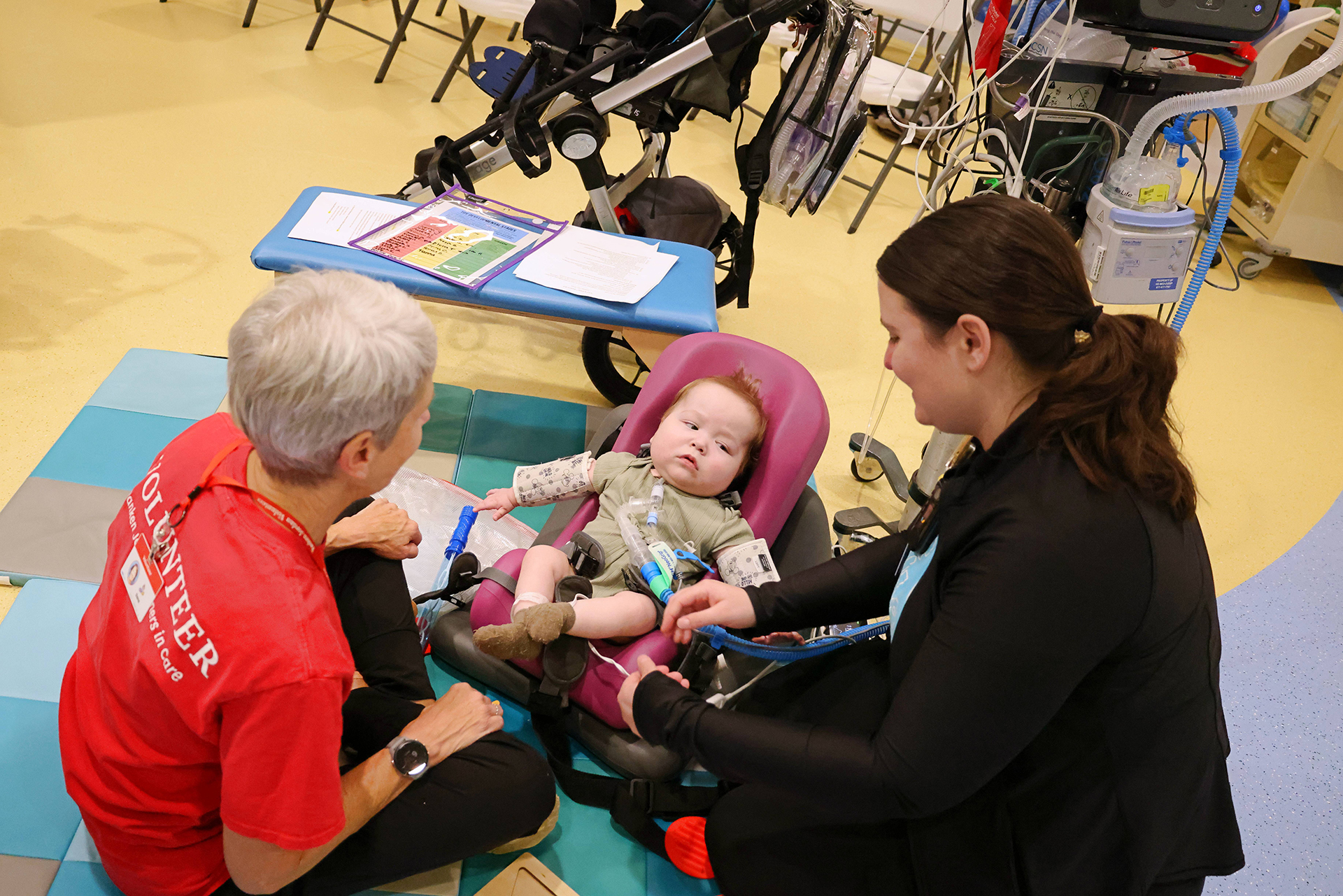
- Position the child in a way to promote engagement. By providing the proper support, children can engage with their environment, including their caregivers and toys. Face-to-face is key when interacting with children.
- Follow a child’s lead during play. By allowing a child to lead play activities, we are empowering them while building necessary relationships and trust.
Sessions also include guidance on positioning the child, especially if they can’t stand or walk on their own, as well as tips for playing with neurodiverse children. We often have patients with Autism, ADHD, or brain injuries. Neurodiverse kids may not play in what many of us would consider “typical” ways. Our Let’s Play sessions provide tips for neuro-affirming play, so the kids learn they’re not doing anything “wrong” and there’s nothing that needs to be fixed.
Why Play Matters
Almost two years since our first Let’s Play session, we’re seeing amazing results. Patients are more engaged when the skills from the session are used and our volunteers in particular have shared they feel much more confident playing with children.
We’ve also seen significant updates since the implementation of our new toy system. Our research team found meaningful interaction time while on the unit more than tripled, increasing from an average of 13 minutes per patient per day in 2021 to 47 minutes per patient per day in 2025.
The positive response has led to more Let’s Play sessions, so we’ve put on four sessions since November 2024 and we plan to offer the program three times a year moving forward.
Our commitment to more effective play is critical to our work at Ranken Jordan because play is at the core of our care model. But not all play is created equal–the more effective it is, the more likely it is to help our kids heal, learn, and reach key milestones.
It’s another part of our Care Beyond the Bedside philosophy: At the end of the day, kids are kids, regardless of their ability or conditions, and all kids deserve to play and have fun so they can learn, grow, and, in our case, heal.
How You Can Help
If you’re interested in supporting important initiatives like Let’s Play, please consider donating to Ranken Jordan at RankenJordanFoundation.org.