At A Glance
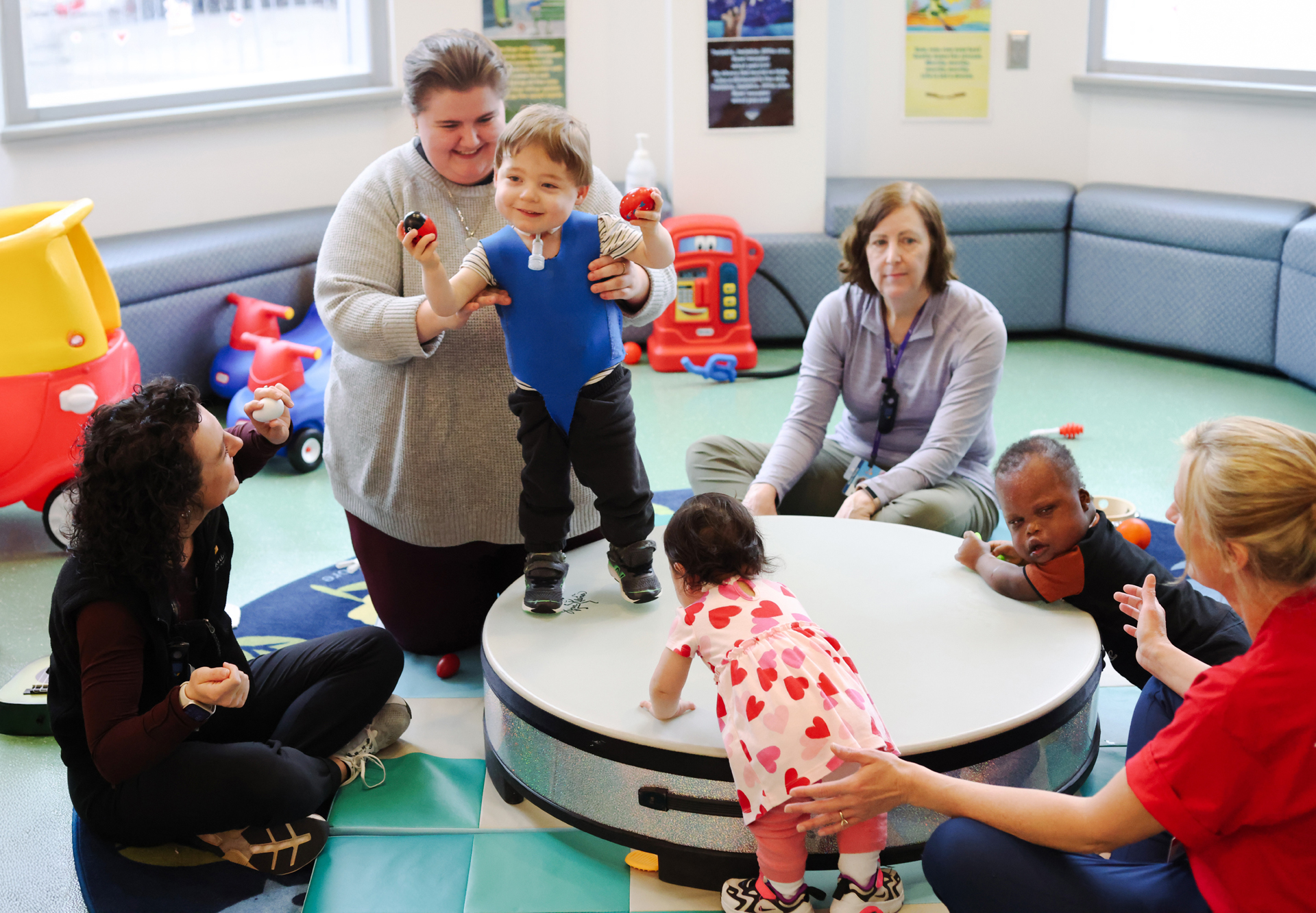
- As part of its Care Beyond the Bedside model, Ranken Jordan offers a robust music therapy program, led by music therapist Mary Hitchcock-Reinhart, MT-BC.
- Music therapy is a clinical and research-based practice that uses music interventions to accomplish healthcare and educational goals.
- Music therapy is used at Ranken Jordan as a way to help patients meet therapy goals but it can also help children heal emotionally and inject some normalcy in their lives.
At Ranken Jordan, we know healing is most powerful when children are free to be kids and they have the freedom to play and enjoy the activities they love, helping to drive their recovery.
One thing we know almost all of our patients connect with is music. Our music therapy program, led by our fantastic music therapist Mary Hitchcock-Reinhart, MT-BC, has helped the healing journeys of so many of our patients.
But it has provided other benefits, too, such as offering emotional support and bringing a sense of normalcy back into the lives of our kids and their families.
What is music therapy?
Music therapy is a clinical and research-based practice that uses music interventions to accomplish healthcare and educational goals.
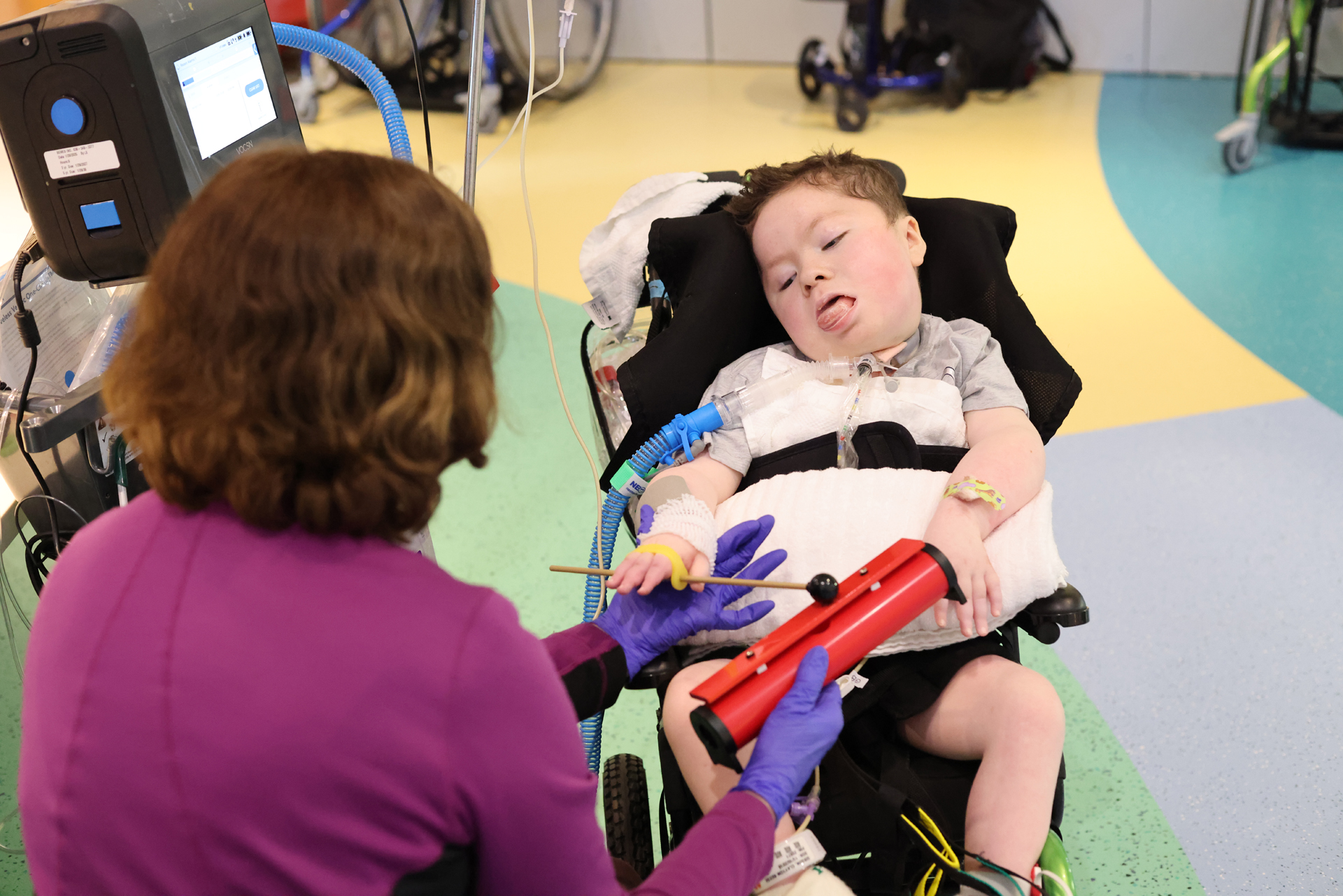
There are a variety of ways music therapy can help a child with complex medical needs. For some, it can be a bridge to communication. A child who struggles with speech may begin by tapping a rhythm or vocalizing along to a familiar tune. Through melody and repetition, children can improve speech production, language development, and cognitive processing.
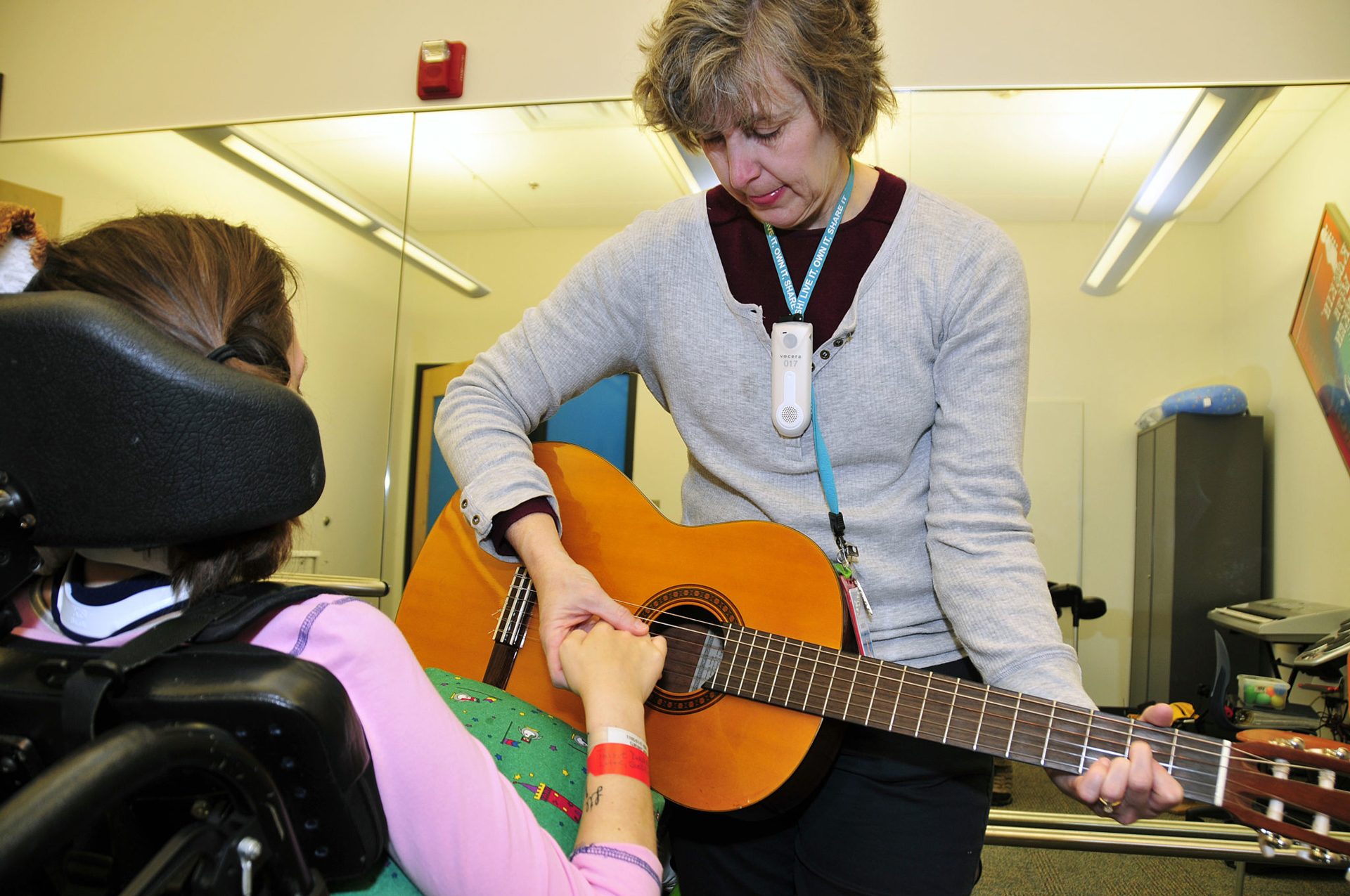
For others, playing instruments helps strengthen fine and gross motor skills. Reaching for a drum, holding a shaker, or pressing piano keys can support coordination, range of motion, and endurance.
The power of music for healing
Mary–or “Music Mary” as many call her!–works with our patients in a variety of ways, from leading sensory, developmental, and social groups to one-on-one sessions.
For one-on-one sessions, Mary identifies patients who could benefit from her program then works to make a plan for how to help reach their therapy goals.
Mary has a specialty in neurologic music therapy so she particularly excels with our brain injury patients.
Music is processed on both sides of the brain so it can help create new pathways. For instance, Mary may play music to see if a brain injury patient can realize where the sound is coming from and try to find her. As the patient progresses, the treatment could lead to strengthening his or her voice or remembering words to a favorite song.
“Many people know the story of the grandfather who couldn’t speak but could still sing beautifully,” Mary said. “Music holds a unique power in the brain nothing else can quite match.”
Treating the whole child
We prioritize treating the whole child at Ranken Jordan and finding ways to connect with them in ways beyond their diagnosis. It’s an example of our unique care model, Care Beyond the Bedside®, which centers around getting kids out of their hospital rooms and using play as healing.
Mary often learns about each patient’s music tastes to make each session personal to them. If a child cannot communicate well, she will often work to find music the patient relates to.
“If it’s a 9-year-old, I usually guess she likes Disney songs,” Mary said. “Or I’ll learn from a parent about the patient’s favorite music. It makes such a difference to find the music a child loves because it can distract a child from the fact that they are dealing with big medical issues. I had one little boy who loved Green Day so we would listen to Green Day and spike his hair and he just loved it.”
Unexpected ways music can help
While we often focus on the benefits of therapy in a physical sense, I have seen the emotional and psychological benefits our music therapy program has given our patients as well.
When I first started working at Ranken Jordan, Mary was working with a little girl who had lost her mother. Mary helped the little girl write a song about her mother and she later performed it on stage in front of the whole hospital. Everyone was crying. It was so moving to see a girl who was dealing with such a loss communicate her memories of her mother in this way.
Music also brings a sense of normalcy to our patients. Everyone has music in their life, whether it’s listening to something on the way to school or it’s on at home while cooking dinner.
Parents of our patients love to see their child enjoying music at Ranken Jordan because it brings them back to a sense of normalcy, something they have likely been missing after sitting in hospitals for a long time.
How you can help
Music therapy is rarely reimbursable by insurance. Ranken Jordan depends on our donors to fund our robust music therapy program, as well as many other aspects of our Care Beyond the Bedside model.
If you’re interested in supporting our therapy programs and our work at Ranken Jordan, please donate at RankenJordanFoundation.org.
With your support, we can continue creating moments of healing and connection through programs like music therapy.